On this page 13 sections
- The timing at a glance
- The rules that make real estate follow-ups work
- After a viewing
- After a valuation
- Portal and website leads
- Offers in progress
- Past clients and referrals
- How to personalise a template in thirty seconds
- Measuring what works
- The last email in a sequence
- Subject lines
- Common mistakes that cost listings
- Automating it without losing the personal touch
In real estate, the agent who follows up well usually gets the business. Buyers see several homes in a weekend, sellers talk to three agents before choosing one, and portal leads send the same question to five people. Very few of them actually say no. They go quiet, and the work goes to whoever got back in touch at a good time with something useful to say.
Below are twelve follow-up emails grouped by situation: after a viewing, after a valuation, portal and website leads, offers in progress, and past clients. Each one has a suggested day, and there's a timing table you can copy into your own process.
This guide is for estate agents, realtors and lettings agents following up with buyers, sellers, landlords and tenants who have already been in touch. It doesn't cover cold prospecting, such as emailing homeowners from a purchased list, which has different legal rules in most countries.
The timing at a glance
| Situation | First follow-up | Then | Stop after |
|---|---|---|---|
| After a viewing | Next day | Day 3, day 7 | Day 14 |
| After a valuation | Day 1 or 2 | Day 4, day 10 | Day 21 |
| Portal or website enquiry | Within minutes, written by you | Day 1, day 3, day 7 | Move to a monthly update |
| Offer made, no answer | Same day | Every 2 or 3 days | When the paperwork is signed |
| Past client | One year after completion | Once a year | When they ask you to stop |
The gaps get longer as you go, so you stay in touch without seeming pushy. Send during business hours in your client's time zone, and skip weekends unless weekend viewings are part of the conversation.
The rules that make real estate follow-ups work
- Reply in the same thread, so your original email, the listing link and the viewing time stay in one place.
- Keep it to two to four sentences. Your client is often reading on a phone between other viewings.
- Bring something new each time, like a new listing, a date, a price change or a simpler question.
- End with one question that can be answered in a line.
- Stop as soon as they reply. A reminder that arrives after they've answered undoes the goodwill you built.
After a viewing
1. The next-day check-in (day 1)
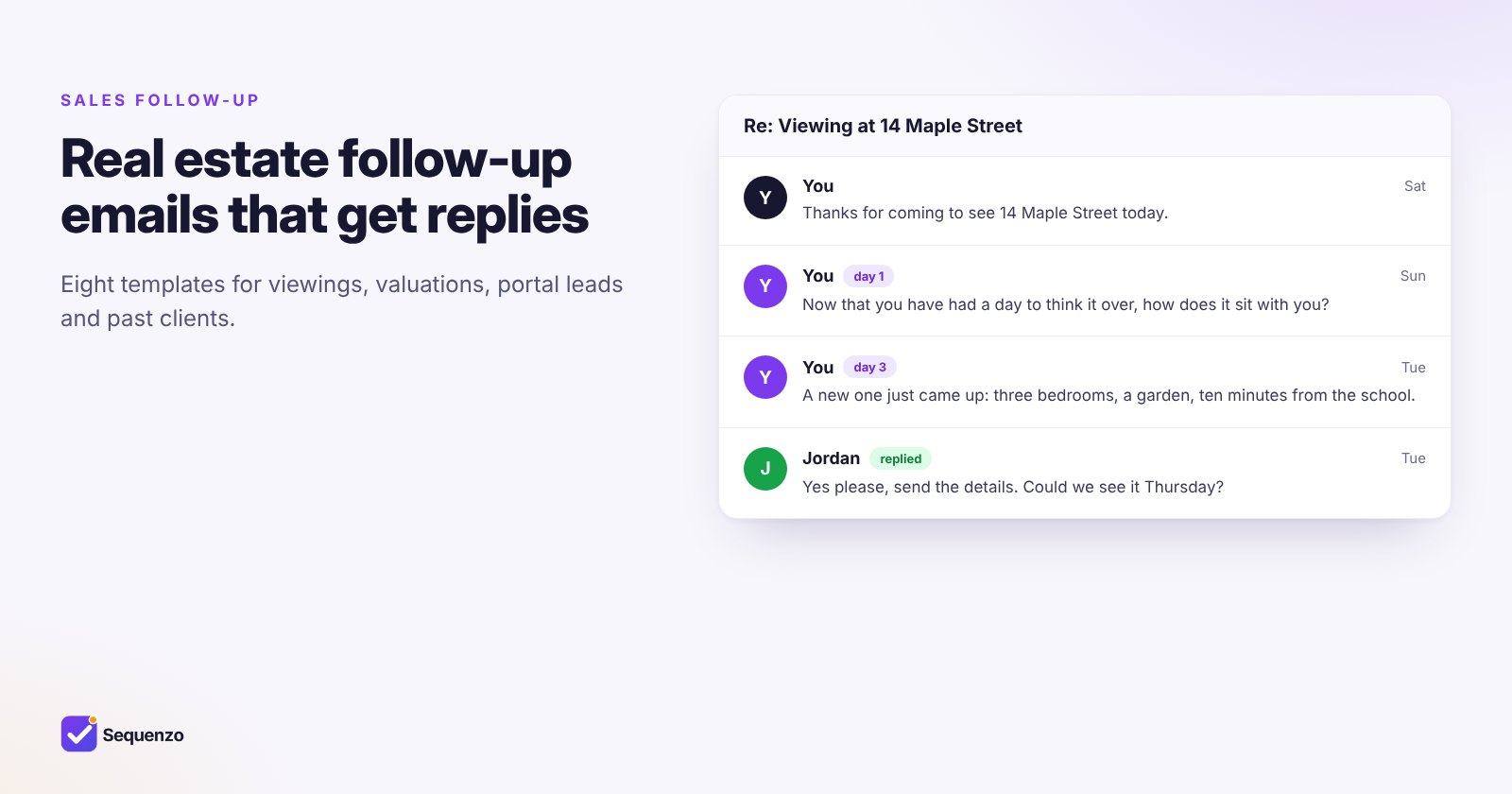
"Hi Jordan, thanks again for coming to see 14 Maple Street. Now that you've had a day to think it over, how does it sit with you?"
2. The documents and a second look (day 2)
"Jordan, here are the floor plan and the energy report I mentioned. If it helps, I can hold a slot on Saturday morning for a second look with whoever else needs to see it."
A second viewing is often when couples decide, so offering one directly saves a round of emails.
3. The new-listing nudge (day 3)
"Jordan, a new one just came up that looks close to what you described: three bedrooms, a garden, ten minutes from the school. Would you like the details before it goes on the market this weekend?"
4. The easy out on timing (day 7)
"Hi Jordan, is the timing just off? No problem at all. Tell me when would be better and I'll follow up then."
After a valuation
5. The numbers follow-up (day 2)
"Hi Sam, did the valuation make sense? I'm happy to walk you through the recent sales I based it on. It takes about ten minutes. Would later this week work?"
6. The marketing plan (day 4)
"Sam, I've put together a one-page plan for how I'd launch your home: the photos, the first two weekends of viewings and where it would be advertised. Want me to send it over?"
Sellers comparing agents often decide on the plan rather than the figure. Sending it in writing gives them something to compare.
7. The market update (day 10)
"Sam, two homes on your street went under offer this week, both within a few days of listing. If you're thinking about spring, it's worth planning the photos now. Shall I pencil something in?"
Only use local facts you can back up from your own sales or public data.
Portal and website leads
8. The fast answer (same day)
"Hi Priya, thanks for asking about the flat on Park Road. Yes, it's still available, and there are viewing slots on Thursday evening and Saturday morning. Would either of those suit you?"
Speed matters most here. Send the first reply yourself as soon as you can, then let the follow-ups take care of the silence. Speed to lead explains why.
9. Similar homes (day 2)
"Priya, in case Park Road isn't quite right, here are two similar flats in the same price range. The first has the second bedroom you mentioned, and the second is closer to the station. Want to see either?"
10. One question (day 7)
"Quick question so I only send you relevant homes: what are your must-haves, and what would be nice but optional?"
The answer tells you what to send next, and once they've replied you're in a real conversation. For the full plan after this point, see the 90-day real estate lead follow-up plan.
Offers in progress
11. Keeping a sale moving
"Hi Alex, a quick update: the survey is booked for Thursday and the seller's solicitor has sent the draft contract. Is there anything you're waiting on from us?"
Short, regular updates during a sale stop buyers and sellers from worrying, and they surface problems early.
Past clients and referrals
12. The anniversary check-in
"Hi Alex, it's a year since you got the keys to Oak Lane. Hope you're settled in! If anyone you know is thinking of buying or selling, I'd be glad to help them the same way."
How to personalise a template in thirty seconds
A template saves time only if it still reads like you wrote it to one person. Before you send, change three things:
- The detail they mentioned. "You said the garden mattered most" beats any generic line.
- The address or area, so they don't have to work out which home you mean.
- The next step, with a real day and time.
Everything else can stay the same. Buyers don't mind a familiar structure. They mind an email that could have been sent to anyone.
Measuring what works
After a month, look at which emails get replies. Most agents find one or two templates do most of the work, often the one-question email and the new-listing nudge. Keep those, rewrite the ones nobody answers, and try one change at a time so you know what made the difference.
The last email in a sequence
When a buyer has gone quiet after three or four follow-ups, close the loop: "Hi Jordan, I haven't been able to catch you, so I'll assume now isn't the right time and close this out on my end. If anything changes, just reply. It comes straight to me." It sounds backwards, but a clear, friendly last email is often the one that gets an answer, because it takes the pressure off. The breakup email has more examples.
Subject lines
Most of these emails should go out as replies in the original thread, so the subject takes care of itself: "Re: 14 Maple Street: your viewing". Start a new subject only for something new, such as a different listing. Make it specific, for example "New listing near Oak Lane school", rather than "Thought you'd like this!". See follow-up email subject lines.
Common mistakes that cost listings
- "Just checking in." It gives nobody a reason to reply. Add a listing, a date or a question instead.
- Guilt. "I haven't heard back from you" makes people defensive. Offer an easy out.
- A new subject line every time. It looks like a mailing and breaks the conversation apart.
- Adding portal leads to a newsletter without asking. A reply about the home they enquired about is expected. A marketing newsletter usually needs their consent. See follow-up emails and the law.
- Following up after they've replied. Nothing looks more automated. Make sure your follow-ups stop as soon as anyone answers.
Automating it without losing the personal touch
Writing these by hand works until you have twenty live buyers. Sequenzo sends follow-ups like these from your own Gmail or Outlook inbox, in the original thread, with your signature, and stops when someone replies. You pick a flow when you send the viewing or valuation email, and each step goes out during your working hours. The templates above come with it, so you only need to change the wording to sound like you. If you'd rather start from a blank page, the free follow-up email generator drafts one for a specific situation.
Frequently asked questions
Q01How soon should a real estate agent follow up after a viewing?
The next day is ideal: the viewing is still fresh, and the buyer has had a night to think. After that, space follow-ups further apart (for example day 3, day 7 and day 14) and stop as soon as they reply.
Q02How many times should I follow up with a buyer?
Three or four follow-ups after your first email is enough for most buyers. Make the last one a polite "I will close this out on my end" message, which often gets a reply when the others did not.
Q03Should real estate follow-ups use a new subject line?
No. Reply in the original thread so the listing, the viewing time and your earlier emails stay together. A new subject line makes a follow-up look like a newsletter.