On this page 3 sections
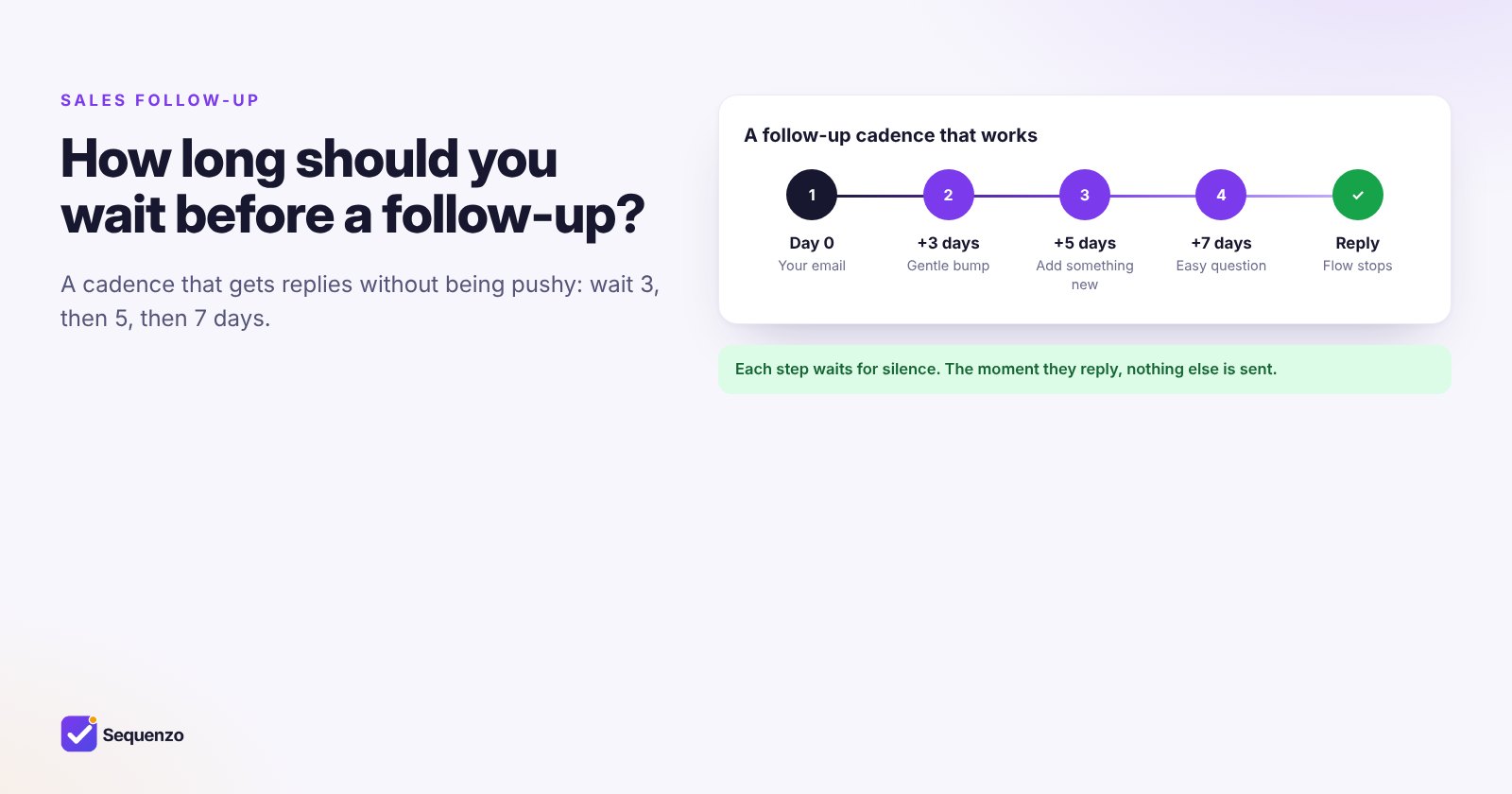
Most follow-ups that fail do so for one of two reasons. They go out too soon and feel pushy, or they go out so late that the other person has moved on. For most sales conversations, a good starting point is to wait about three days before the first follow-up, then five days, then seven. For more detail, see the follow-up cadence playbook.
Why the gaps should get longer
The first follow-up is the one most likely to get a reply, because the conversation is still fresh. After that, each reminder is a little less welcome than the one before, so leave more room between them. Longer gaps also give a busy person time to deal with whatever you sent.
Say something new each time
Each follow-up should add a small piece of new information or ask for something easier. Repeating the same request in different words rarely works. A date, a short answer to a likely question or a simpler next step gives people a reason to reply.
When to stop
Stop as soon as the person replies, even if the reply is “not now”. A scheduled reminder that arrives after someone has answered looks careless. If there's still no reply after three or four follow-ups, send a short note closing the loop and leave it there. The breakup email covers how to write that last one.
Frequently asked questions
Q01How long should I wait before sending a follow-up email?
For most sales conversations, wait about three days before the first follow-up, then space later ones further apart, for example five and then seven days.
Q02Should every follow-up say something new?
Yes. Each follow-up should add a small piece of new information or ask an easier question, rather than repeat the same request.
Q03When should a follow-up sequence stop?
As soon as the person replies, even if the reply is "not now". A scheduled follow-up that arrives after a real reply looks careless.