On this page 10 sections
- How long should you wait before following up?
- How many follow-ups is too many?
- What makes a follow-up work
- Templates you can use today
- After sending a proposal or quote
- Chasing an unpaid invoice
- Following up with a candidate
- After a meeting or demo
- Mistakes that quietly kill replies
- Automating it without losing the personal touch
Most replies don't come from the first email. They come after someone was reminded at the right moment, in the right tone. People aren't ignoring you. Your email simply slid below forty newer ones before they got to it.
A good follow-up fixes that without sounding desperate. This playbook covers when to send, how many to send, and exactly what to write.
How long should you wait before following up?
There's no single right number, but a few principles hold across sales, recruiting, partnerships and collections:
- Give the first email room. Two to three working days is a sensible first gap for most business email. Sooner can feel pushy. Much later and the thread has gone cold.
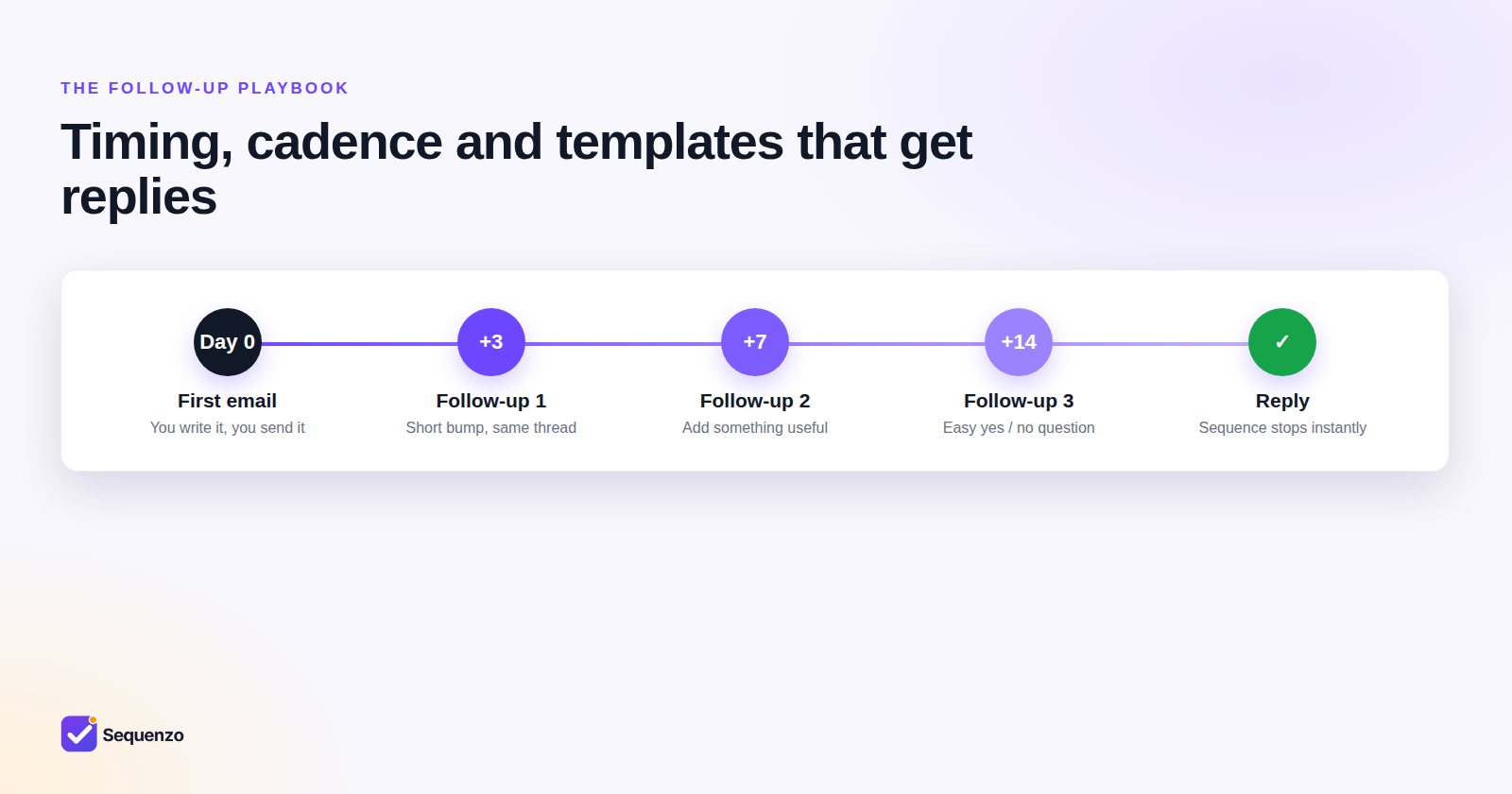
- Space each follow-up further apart. A pattern like +3, +7 and +14 days respects the other person's time and still keeps you in view.
- Match the stakes. An overdue invoice or a time-limited offer justifies a tighter rhythm. A partnership idea deserves more patience.
- Send when they're working. Business hours in their time zone, on working days.
How many follow-ups is too many?
For most conversations, two or three follow-ups after the first email is enough. After that, a polite "closing the loop" message gives the other person an easy way out and often gets the reply the others didn't.
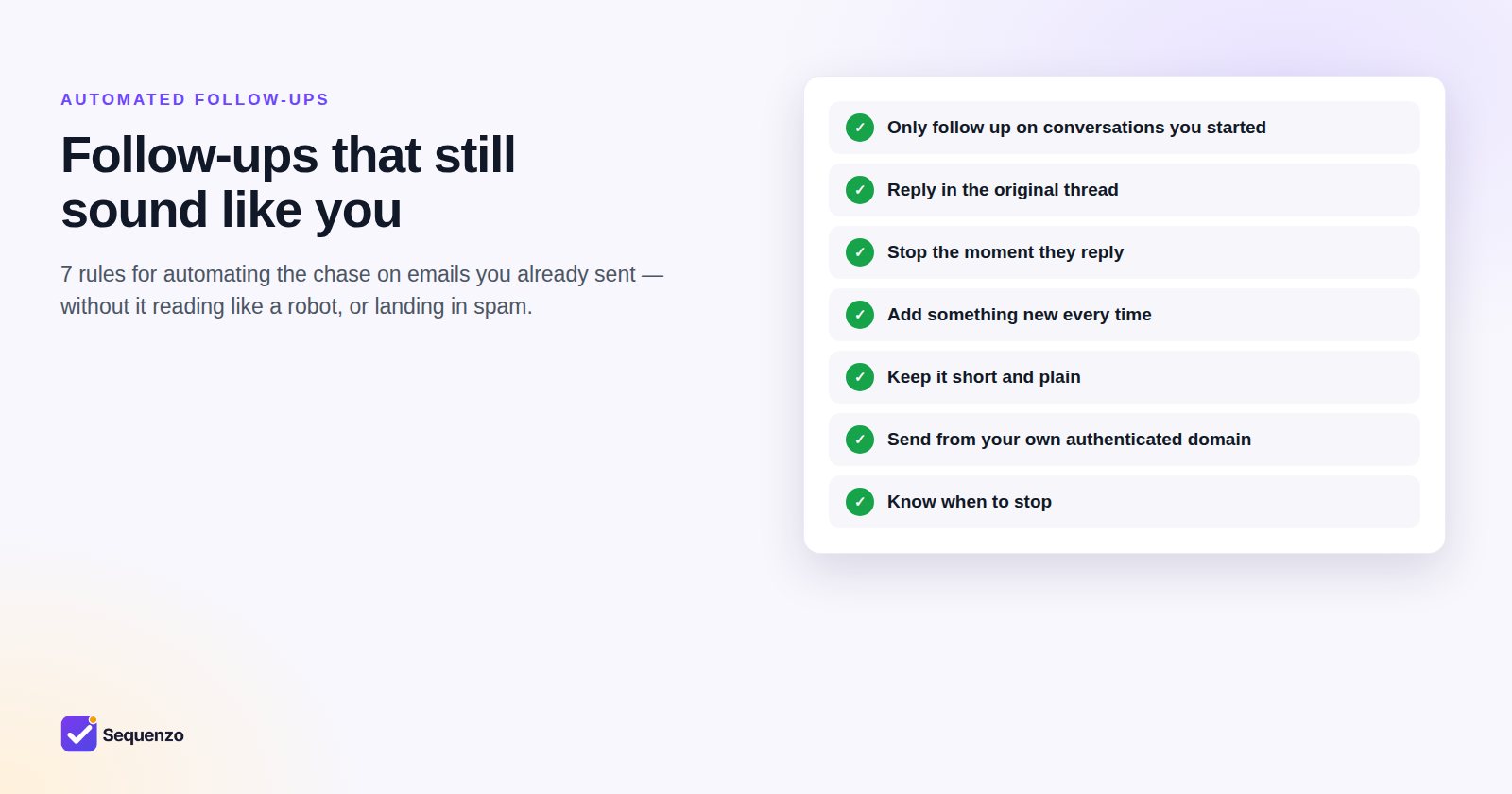
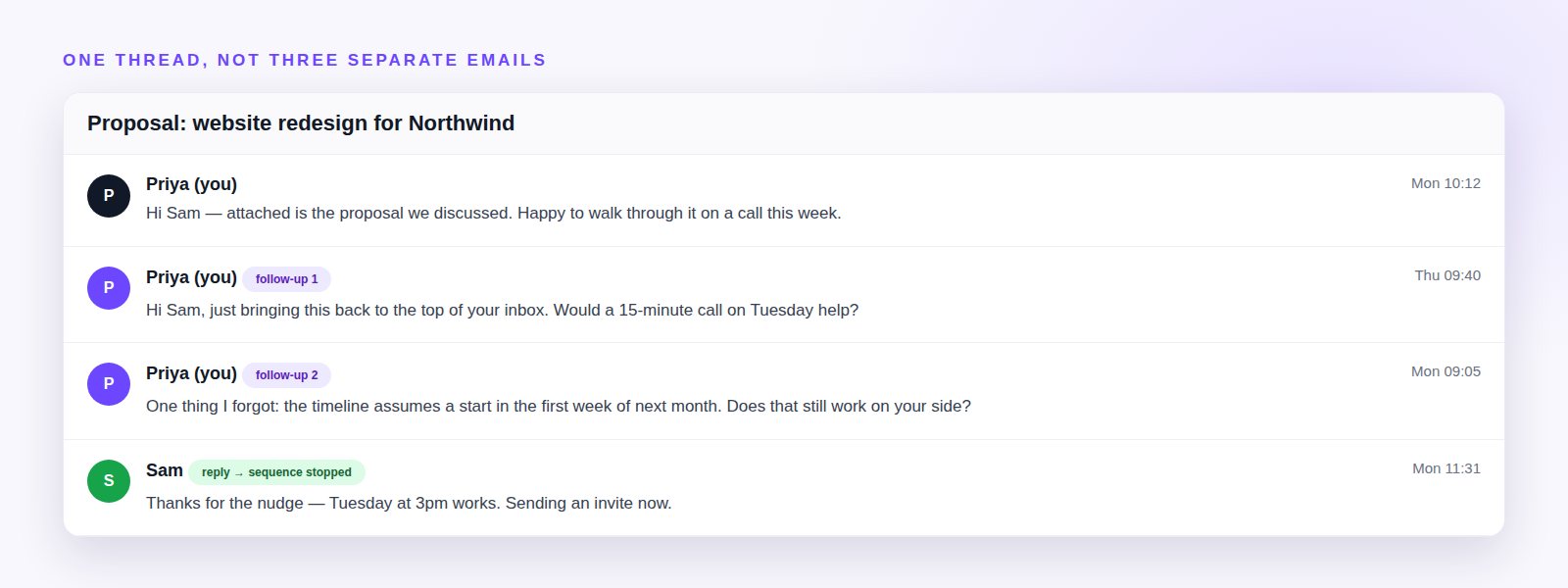
Whatever the number, one rule is fixed: the moment someone replies, stop. Even a "not right now" is a reply. Sending a scheduled nudge after a real answer is the fastest way to lose goodwill, and it's the main thing to get right when you automate follow-ups.
What makes a follow-up work
- Stay in the same thread. Reply to your original email so the context is right there. A new subject line forces them to search for what you're talking about.
- Add something each time. A detail you forgot, a relevant example, a shorter version of the ask, a deadline that's actually real. "Just checking in" adds nothing.
- Make the next step small. "Would Tuesday at 3pm work for 15 minutes?" is far easier to answer than "Let me know your thoughts."
- Keep it short. Two to four sentences. The original email is right there in the thread if they need the detail.
- Stay warm. No guilt, no "as per my last email", no triple question marks.
Templates you can use today
After sending a proposal or quote
Follow-up 1 (+3 days): "Hi Sam, bringing this back to the top of your inbox. Would a 15-minute call this week help you decide? I can walk you through the pricing options."
Follow-up 2 (+7 days): "One thing I didn't mention: we can start with the smaller scope and add the rest later if that's easier to approve. Would that help?"
Follow-up 3 (+14 days): "I don't want to fill your inbox, so this is my last note on this. If the timing isn't right, just say so and I'll check back next quarter."
Chasing an unpaid invoice
+1 day after due: "Hi Priya, a quick reminder that invoice #1042 was due yesterday. I've attached it again here. Let me know if anything needs correcting on your side."
+7 days: "Following up on invoice #1042. Could you let me know when payment is scheduled, or who in accounts I should speak to?"
Following up with a candidate
+2 days: "Hi Arjun, just checking you saw my note about the Senior Engineer role. Happy to share the salary range and team details before you decide whether to talk."
After a meeting or demo
+2 days: "Thanks again for Tuesday. As promised, here's the one-page summary. Is the pilot we discussed something you'd like to go ahead with this month?"
Mistakes that quietly kill replies
- Following up on a new thread with no context.
- Sending the same message every time.
- Following up after they replied, because a reminder in your calendar didn't know.
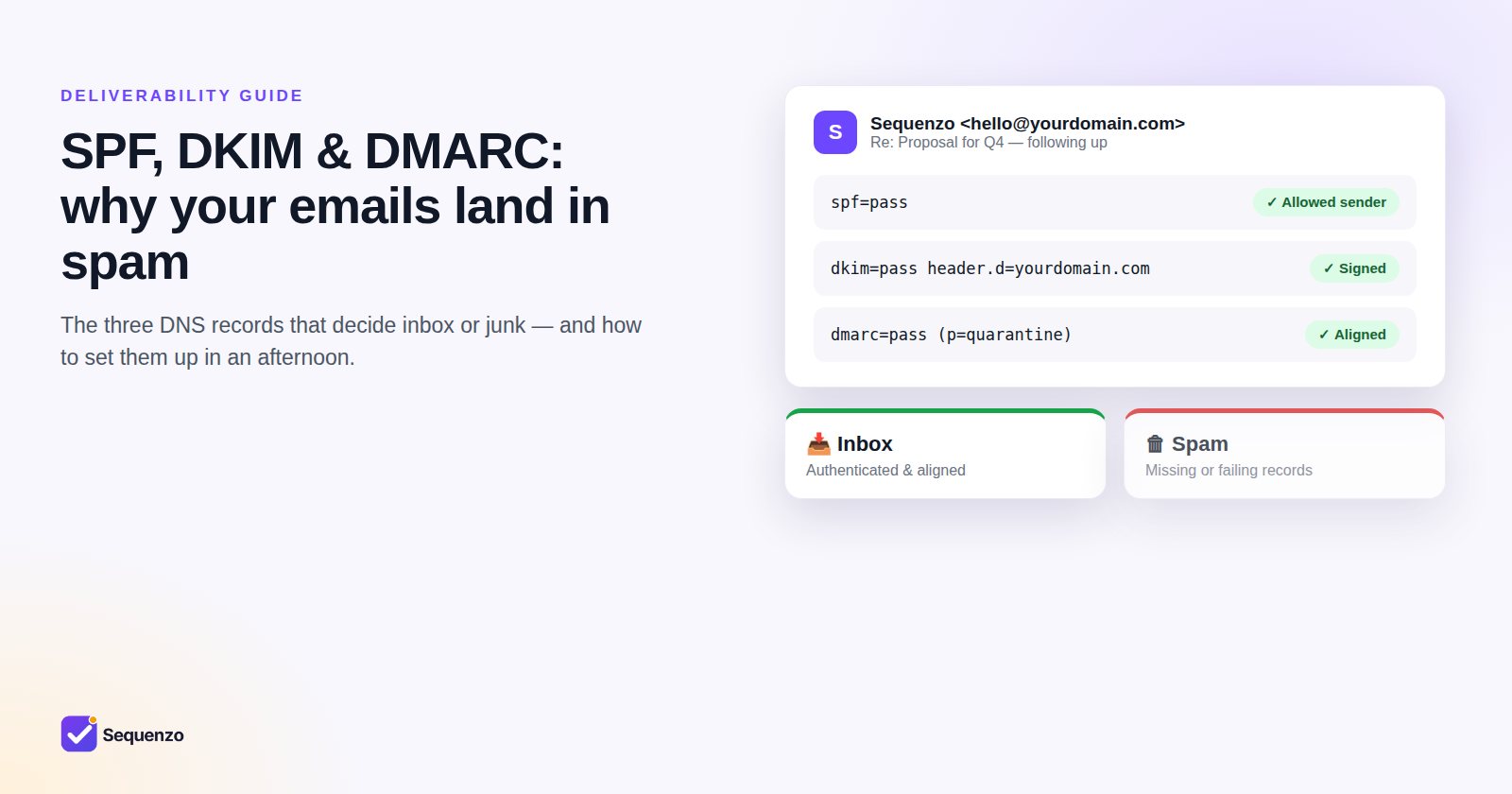
- Following up with people you never emailed in the first place. That's cold outreach, not a follow-up, and it hurts your sending reputation.
- Following up forever. Know when to close the loop.
Automating it without losing the personal touch
Following up by hand works until you're chasing twenty threads a week. Then it becomes a spreadsheet, a pile of calendar reminders and a lot of things you forgot. Sequenzo does the chasing for you: you write and send the first email yourself, choose a cadence, and the follow-ups go out from your own mailbox, in the same thread, on the days you chose. It stops the moment the other person replies.
Frequently asked questions
Q01How long should I wait before sending a follow-up email?
For most business email, two to three working days is a sensible first gap, with each later follow-up spaced further apart (for example +3, +7 and +14 days). Tighten the rhythm when there is a real deadline, such as an overdue invoice, and give partnership or relationship emails more time.
Q02How many follow-up emails should I send?
Two or three follow-ups after the first email is enough for most conversations, then a polite closing-the-loop message. Always stop as soon as the person replies - even a "not now" counts.
Q03Should a follow-up be a new email or a reply in the same thread?
Reply in the same thread. The context is right there, the recipient doesn't have to search for your original message, and it reads as a natural continuation of the conversation.
Q04What should I write in a follow-up email?
Two to four sentences that add something new - a missing detail, a smaller or easier next step, a relevant example - and end with one easy question. Avoid "just checking in" with nothing new, and avoid guilt or urgency you don't mean.
Q05Is automating follow-ups the same as cold emailing?
No. A follow-up continues a conversation you already started with someone who has a reason to hear from you. Sequenzo only follows up on emails you sent yourself, from your own mailbox, and stops the moment they reply. It has no bulk sending or lead lists.